If you’ve been living as a location-independent entrepreneur for any length of time, you already know the script.
You pack up your life, book a flight to Canggu, Lisbon, or Playa del Carmen, and land in a crowded digital nomad hub. You spend your first three days fighting for a table at a hipster cafe, wrestling with spotty Airbnb WiFi, and trying to ignore the chaotic, transactional vibe of tourists passing through.
By week two, a creeping sense of frustration sets in. You came looking for inspiration and community, but instead, you’re paying high prices for a crowded room, working 12 hours a day while surrounded by people who only care about weekend parties.
I’ve been living as a global nomad for over 15 years across 40+ countries. I’ve written books on treadmill desks in condo gyms, run growth agencies from beach bungalows, and organized global masterminds from Greece to Thailand.
And if there’s one fundamental law I’ve proven across thousands of split-run tests and real-world experiments, it’s this:
Your environment dictates your output.
When your environment is chaotic, your mind operates in a reactive loop. But when you step into an environment of pristine beauty, radical affordability, and deep cultural warmth, your brain naturally unlocks a state of creative flow.
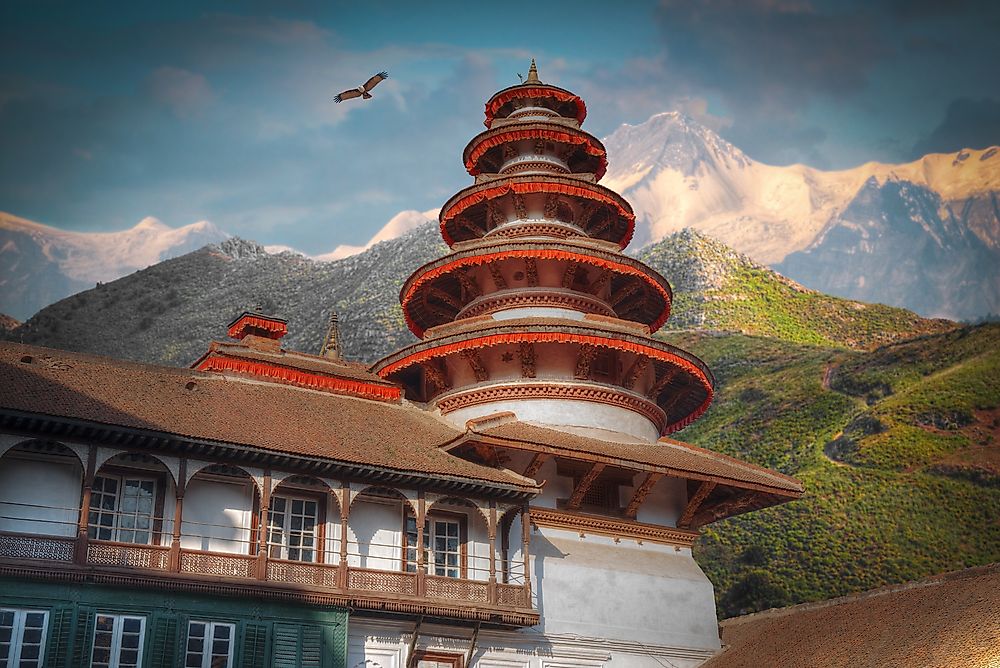
That is why we built Nomad Basecamp in Pokhara, Nepal.
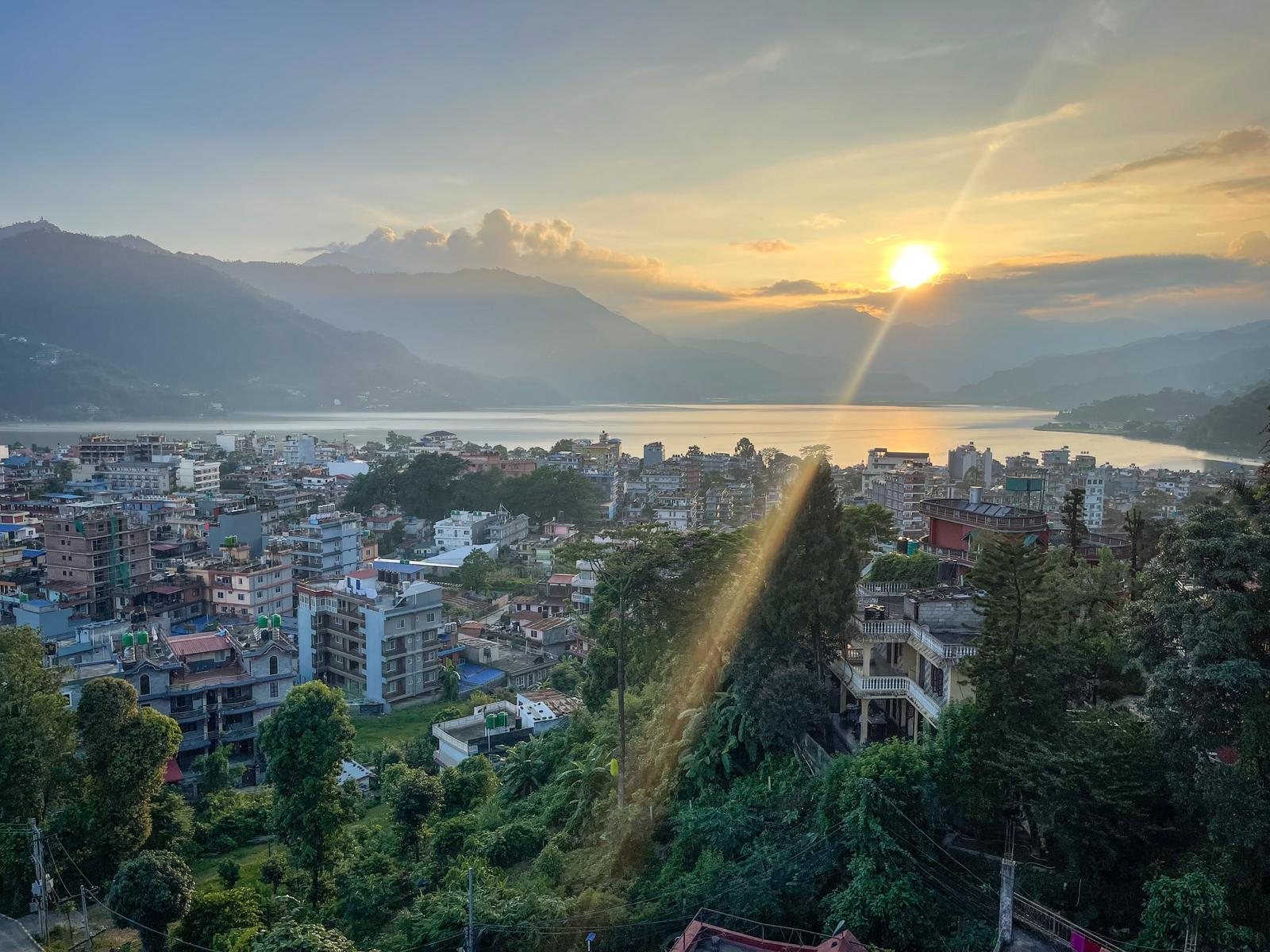
If you’ve ever wondered what it’s actually like to live and work beneath the highest mountains on Earth, let’s peel back the curtain.
The “Fast WiFi + Slow Living” Paradox
Have you ever tried to join an important client closing call from a beach town during a sudden monsoon storm?
It’s a nightmare. The power cuts out, the router dies, and you’re left sweating over a phone hotspot while your deal evaporates.
This is the exact reason most remote workers hesitate when considering a destination like Nepal. They assume that living near the Annapurna range means sacrificing modern infrastructure for “rustic charm”.
Well, let me let you in on a little secret…
You don’t have to choose between high-level productivity and Himalayan Zen.
Here’s the reality of a typical Tuesday at Nomad Basecamp:
You wake up at 6:30 AM to the sun rising over the snow-capped peak of Machhapuchhre (Fishtail). You head down to our lush garden courtyard, grab a hot cup of fresh local coffee and an organic breakfast prepared by on-site chefs, and open your laptop.
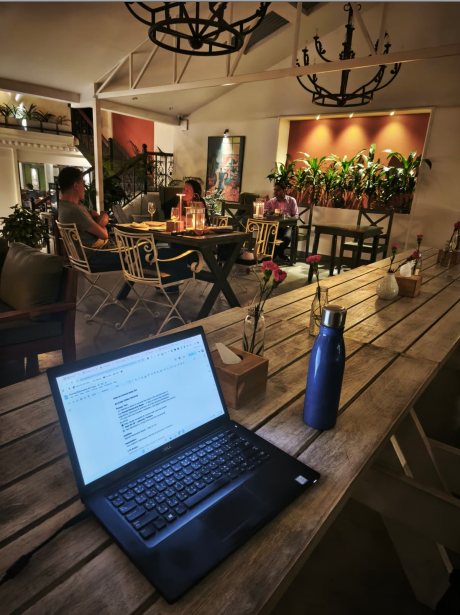
By 9:00 AM, you’re sitting in a dedicated coworking space alongside 20+ founders, creators, and growth hackers. The fiber-optic WiFi is humming at 50–100 Mbps.
And if the local city grid experiences a power cut?
It doesn’t touch you. Because our coliving property is equipped with a dedicated solar power backup system. The routers stay online, the lights stay on, and your Zoom calls run without a single stutter.
See?
Isn’t that better than stressing over power outages in a random rental apartment?
The Real Cost of Living: A $700-1000/Month Paradise
Let’s talk numbers. As entrepreneurs, we care about leverage and ROI.
If you want to maintain a high-end lifestyle in Bali, Tulum, or Western Europe—private room, daily eating out, coworking pass, wellness classes—you’re easily burning $1,800 to $2,500+ a month.
In Pokhara, Nepal, you can live like royalty for $700 to $1,000 total per month.
Don’t look at me like that. I know it sounds almost unbelievable. But let’s break down the real-world math:
- Accommodation & Coworking ($699 / month): Your early bird rate at Nomad Basecamp includes a private room with an en-suite bathroom, desk, and balcony overlooking Phewa Lake. It includes daily organic breakfasts, room cleaning, solar backup, courtyard pool access, and daily activities like Hatha yoga and business masterminds.
- Mobile Data ($9 / month): The moment you step off the plane, you pick up an Ncell SIM card. For 1,200 NPR (~$9 USD), you get 88 GB of high-speed 4G data. You can hotspot your laptop mid-hike on a mountain viewpoint.
- Food & Dining ($150 – $200 / month): A full meal of fresh, local Dal Bhat—which comes with unlimited refills of rice, lentils, and curry—costs about $2.00 to $3.00. A plate of steamed momos costs $1.50. Even Western-style espresso cafes by the lake rarely exceed $4.00 for a meal.
- Getting Around ($20 / month): The local city bus running along Lakeside Pokhara costs 25 Nepali rupees (about $0.18 USD). If you want a quick motorbike ride, you tap the InDrive app for a $1.00 ride.
Think about what this financial runway gives you.
When your living expenses drop by 70% without sacrificing luxury or work performance, the pressure vanishes. You stop taking on bad clients out of desperation. You gain the cognitive space to focus 100% of your energy on building your core product, launching your book, or scaling your agency.
Transactional Networking vs. Finding Your Global Tribe
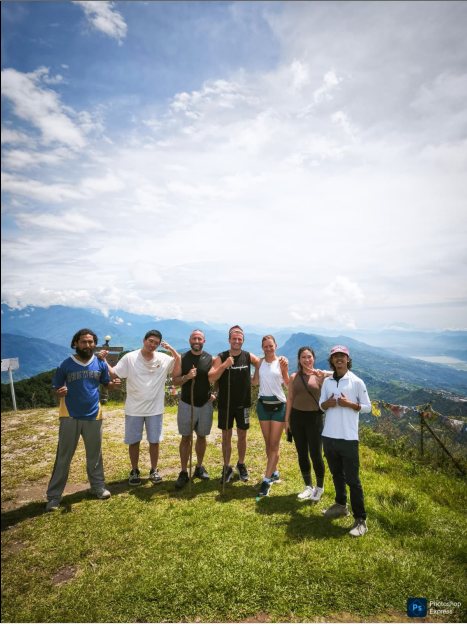
There’s a famous Nepali phrase rooted deep in the local culture: Atithi Devo Bhava.
It translates to “The Guest is God”.
In saturated digital nomad hubs, locals often treat foreigners as walking wallets. The interactions feel transactional, rushed, and hollow.
In Nepal, the hospitality is genuine, ancient, and transformative. When you walk down the street in Pokhara, people greet you with a genuine Namaste and a warm smile.
If you’ve felt isolated working solo from dark coffee shops or bland Airbnbs… then stepping into a true coliving family changes everything.
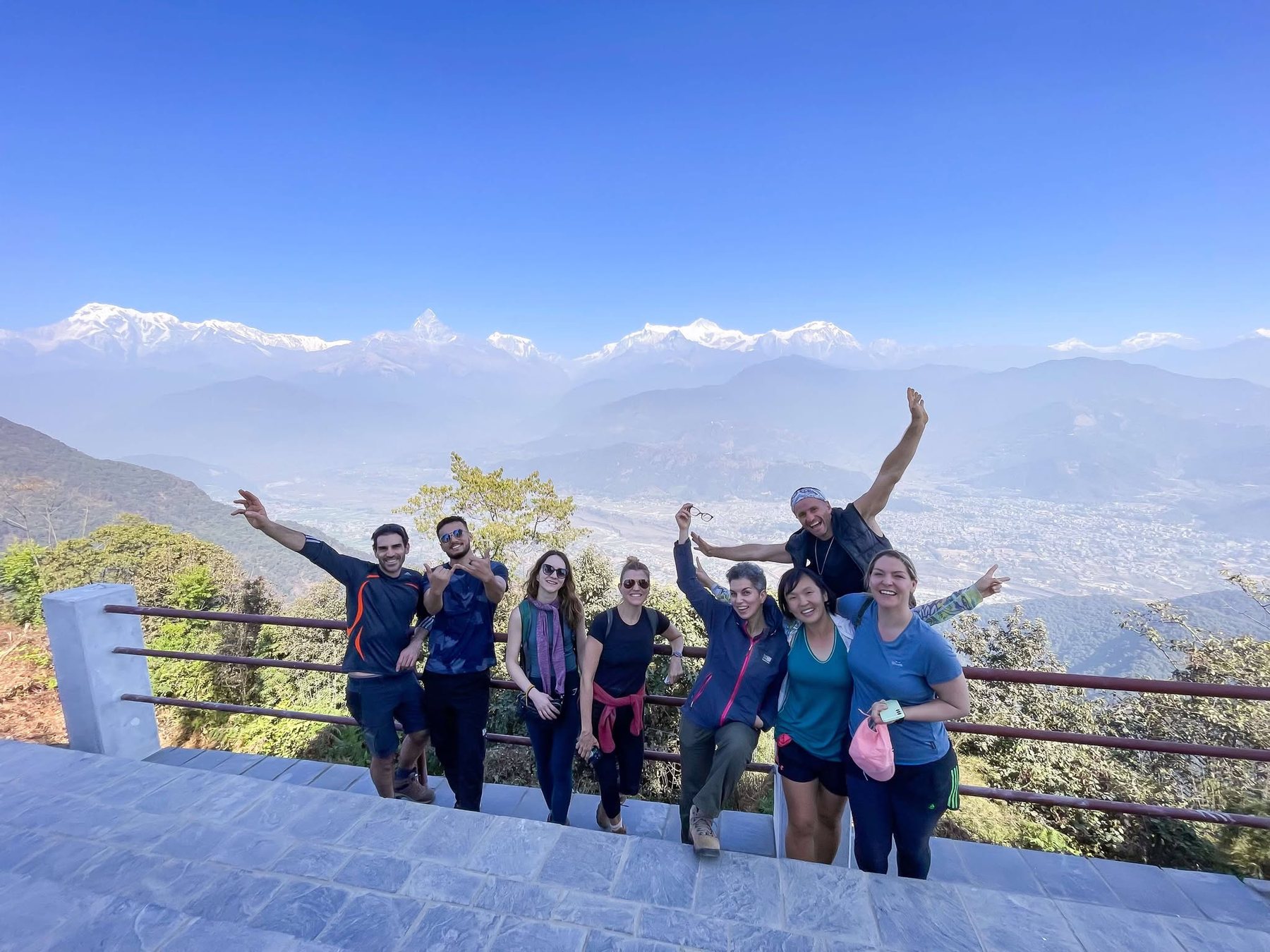
At Nomad Basecamp, you get your own private sanctuary when you need quiet focus. But the second you step out onto the rooftop or garden, you are surrounded by 20+ ambitious, kindred spirits.
One evening you’re roasting landing pages in a rooftop mastermind circle. The next morning, you’re embarking on a 4-day sunrise trek up Ghorepani Poon Hill or Mardi Himal together.
This isn’t “networking” where people exchange LinkedIn profiles and forget each other’s names 24 hours later. It’s about building unbreakable bonds with a global tribe.
The Ultimate Himalayan Milestone: Nomad Basecamp Summit
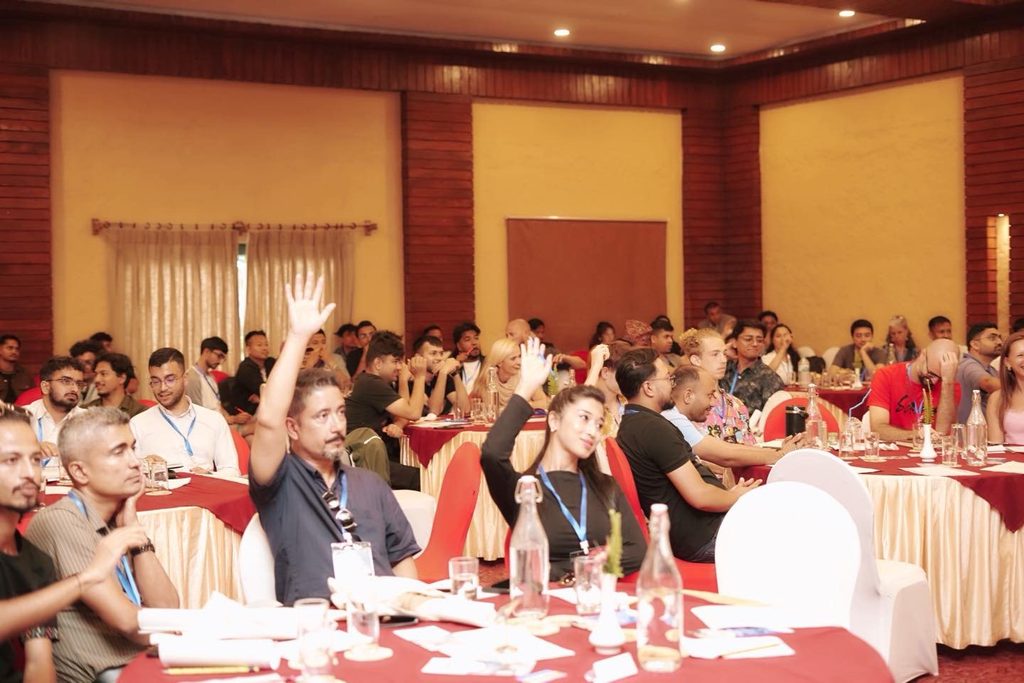
If you want to time your journey to Nepal for maximum impact, plan to be in Pokhara from September 1–7, 2026.
That’s when we host the Nomad Basecamp Nepal Summit at the 5-star Bar Peepal Resort.
We’re bringing together 200+ digital nomads, founders, and 40+ world-class speakers (including legends like John Lee Dumas, Ken Honda, Jody Dontje, Mostafa Salameh, and Sheikh Saifuddin) for 7 days where high-level business strategy meets Himalayan soul.
When you attend the summit, you also unlock our Nomad Basecamp Platinum Rewards Program—giving you lifetime discounts (25–50% off top hotels, 10–20% off nomad cafes like The Juicery Cafe and Roadhouse, and discounts on paragliding and spa treatments) across Pokhara forever.
How to Join the Adventure
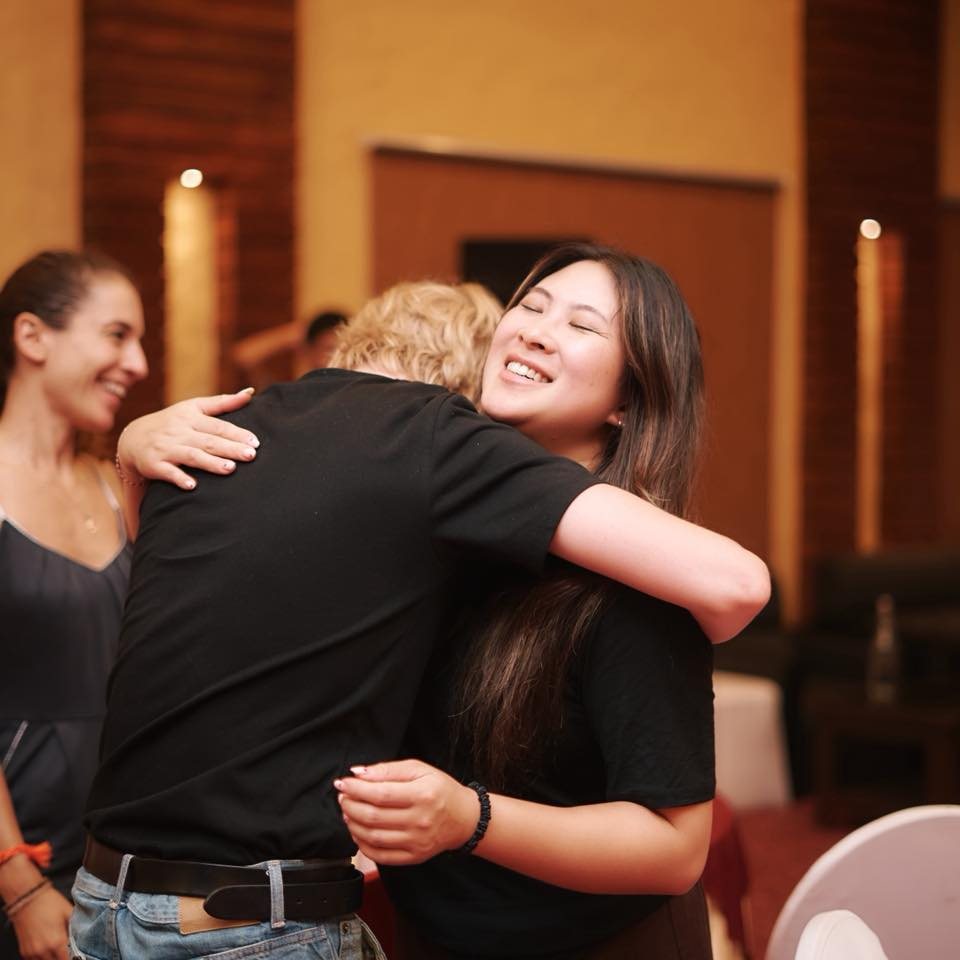
We are currently taking applications for our 30-day coliving retreat (August 20 – September 20) and the annual Summit (September 1–7).
Early bird pricing for the 30-day coliving program is $699 (including private room, daily breakfasts, solar WiFi, and community activities) when reserved more than 60 days in advance.
Super Early Bird passes for the 7-day Summit start at just $199.
Because we cap our coliving capacity to ensure an intimate, high-vibe family environment, spaces fill up quickly.
Are you ready to trade the crowded digital nomad hubs for the ultimate mix of fast WiFi, slow living, and Himalayan magic?
👉 Click here to reserve your spot at Nomad Basecamp Nepal coliving.
Leave a Reply